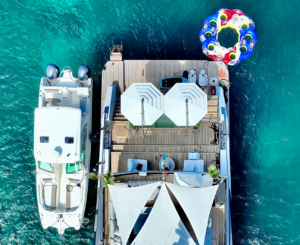

Not every beautiful place in the Caribbean is comfortable to anchor in. Wind, swell, and exposure can turn even the clearest water into a restless stop. What most charter guests end up valuing—often more than anything else—is calm water.
Calm anchorages change everything. Swimming becomes effortless. Paddleboarding feels natural. Meals stretch longer. Sleep comes easier. The entire pace of the trip improves when the boat isn’t constantly moving.
Across the Caribbean, certain anchorages consistently deliver this kind of comfort. Some are protected by geography, others by reefs or surrounding islands, but all share the same result: water that stays still, even when conditions outside are not.
The Bight, Norman Island (British Virgin Islands)
The Bight is one of the most reliable anchorages in the BVI for a reason. It’s naturally enclosed, with surrounding land blocking wind from multiple directions.
The water here tends to stay calm throughout the day, making it an ideal first or last stop of a charter. Guests often swim straight off the yacht, snorkel nearby caves, or simply stay onboard and enjoy the stillness.
It’s also large enough to accommodate multiple yachts without feeling crowded, which helps maintain a relaxed atmosphere even in peak season.
North Sound, Virgin Gorda (British Virgin Islands)
North Sound offers a different kind of calm—wide, open space that’s still protected from swell.
Because it’s partially enclosed by surrounding islands and reefs, the water remains stable even when wind picks up elsewhere. It’s an ideal location for spending a full day without moving.
This is where guests tend to slow down: longer swims, extended time on the water toys, and afternoons that don’t feel rushed. It’s less about a single beach and more about the overall environment.
Tobago Cays (St. Vincent & the Grenadines)
The Tobago Cays are often described as one of the most beautiful places in the Caribbean, but what makes them truly exceptional is the reef protection.
A horseshoe-shaped coral reef surrounds the anchorage, blocking incoming swell and creating a lagoon-like effect. Inside, the water is shallow, clear, and remarkably calm.
Sea turtles move slowly through the area, and visibility is excellent. Guests often spend entire days in the water here because conditions make it so easy.
Compass Cay (Exumas, Bahamas)
In the Exumas, calm water is often tied to tidal patterns, but Compass Cay is consistently one of the more protected spots.
The anchorage sits in a naturally sheltered area, and the surrounding geography keeps water movement minimal compared to more exposed sandbars.
It’s known for its clear water and the presence of nurse sharks, but what stands out most is how comfortable it feels to stay here for extended periods—especially when conditions elsewhere are less stable.
White Bay, Jost Van Dyke (British Virgin Islands)
White Bay combines calm water with easy access to shore, which is part of its appeal.
The bay is shallow and generally protected, creating a stable environment for swimming and relaxing. Even when there’s light wind, the water remains manageable.
This makes it a good balance between a social stop and a comfortable anchorage. Guests can move between the yacht and shore easily without dealing with rough conditions.
Grand Cul-de-Sac, St. Barts
Grand Cul-de-Sac is naturally protected by a reef that runs along the outer edge of the bay.
Inside, the water is shallow and typically very calm, making it one of the best places in St. Barts for water-based activity. It’s particularly well-suited for paddleboarding and relaxed swimming.
Compared to more exposed anchorages around the island, this area offers a noticeably different experience—quieter water, less motion, and a more consistent environment.
Marigot Bay, St. Lucia
Marigot Bay is one of the most protected natural harbors in the Caribbean.
Surrounded by steep hills and narrow entrance points, it’s shielded from both wind and swell. Once inside, the water is almost always calm.
This makes it a popular stop for yachts seeking a break from open water conditions. It’s also a good place to spend a night when stability and quiet are the priority.
Why Calm Anchorages Matter More Than You Think
For first-time charter guests, it’s easy to focus on destinations—specific islands, beaches, or attractions. But experienced travelers tend to pay more attention to conditions.
Calm water affects everything:
- how well you sleep
- how often you swim
- how long you stay outside
- how relaxed the day feels
A great anchorage isn’t just visually appealing. It’s comfortable.
How Captains Choose the Right Spot
Even the best-known calm anchorages depend on weather conditions.
Captains don’t follow fixed plans. They adjust based on wind direction, swell, and local patterns to find the most protected areas available at any given time.
This is why itineraries stay flexible. The goal isn’t to hit specific locations—it’s to ensure each stop feels right.
Final Thoughts
The Caribbean is full of beautiful places, but the ones that stand out over time are the ones where you feel completely at ease.
Calm anchorages create that feeling. They allow the water to become part of the experience instead of something you work around.
In the end, those are the places guests remember—not just because of how they looked, but because of how they felt to be in.