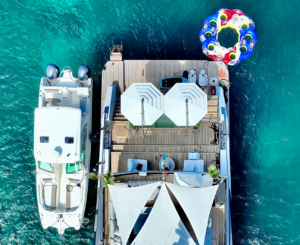

At a glance, yachts and cruises seem like variations of the same idea—time on the water, moving between destinations. In practice, they offer completely different travel experiences.
One is built around scale and structure. The other is built around privacy and flexibility. Understanding the difference isn’t about deciding which is “better”—it’s about choosing the one that fits how you actually want to travel.
Scale Changes Everything
The most obvious difference is size.
Cruise ships carry hundreds or thousands of passengers. They’re designed to operate like floating cities, with multiple decks, restaurants, entertainment venues, and fixed systems to manage large groups.
A yacht charter, by contrast, is private. It’s just your group—typically 6 to 12 guests—with a dedicated crew. There are no other passengers, no shared spaces, and no need to navigate crowds.
This difference in scale shapes everything else that follows.
Fixed Itineraries vs Flexible Routes
Cruises run on strict schedules. Ports, arrival times, and durations are set in advance and rarely change. If you enjoy structure and knowing exactly where you’ll be each day, this can be appealing.
A yacht charter works the opposite way.
The itinerary is flexible. Routes can shift based on weather, guest preferences, or simply finding a place you want to stay longer. If a quiet bay turns into the highlight of the trip, you don’t have to leave it because of a timetable.
You’re not following a route—you’re shaping one.
Crowds vs Privacy
On a cruise, nearly everything is shared: dining rooms, pools, excursions, entertainment spaces. Even with premium packages, you’re still part of a larger system.
On a yacht, privacy is the default.
Meals are served only to your group. Swim stops happen without other boats nearby when possible. Conversations aren’t overheard. You control when you engage with the outside world and when you step away from it.
For many travelers, this shift—from shared to private—is the defining difference.
Movement Through Destinations
Cruises typically dock in larger ports that can accommodate big vessels. From there, excursions are often scheduled and time-limited.
Yachts don’t need ports in the same way.
They can anchor in smaller bays, near beaches, or off islands that cruise ships can’t reach. Movement is more fluid. You might swim off the boat in the morning, go ashore briefly in the afternoon, and move to a new anchorage by evening.
The destinations aren’t just stops—they become part of your living space.
Pace of Travel
Cruise travel is structured around efficiency. Activities, meals, and departures happen at set times to keep everything running smoothly.
Yacht charters move at a slower, more adaptable pace.
There’s no need to rush back onboard before departure. No scheduled dining windows. No announcements guiding the day.
Time stretches instead of compressing. You decide when the day starts, what it includes, and when it ends.
Service Style
Cruise ships offer a high level of service, but it’s distributed across many guests. Staff follow systems designed to maintain consistency at scale.
On a yacht, service is personal.
The crew learns your preferences quickly—how you take your coffee, what time you like to eat, how active or relaxed you want each day to be. Service adapts in real time rather than following a preset structure.
The difference isn’t just quality—it’s attention.
Dining Experience
Cruise dining often involves multiple venues, buffets, and scheduled seatings. While there are premium options, they still operate within a larger system.
On a yacht, dining is entirely customized.
Meals are prepared by a private chef based on your preferences. You eat when you’re ready, where you want—on deck, inside, or even ashore. There’s no need for reservations or fixed times.
Food becomes part of the day’s rhythm rather than a scheduled event.
Space and Atmosphere
Cruise ships are designed to offer variety—multiple areas, entertainment options, and activities for large numbers of people.
Yachts focus on continuity and connection.
Spaces flow into each other. Indoor and outdoor areas blend. You’re always close to the water. The atmosphere is quieter, more cohesive, and less segmented.
It feels less like a venue and more like a temporary home.
What Each Experience Is Best For
Cruises tend to work well for travelers who:
- enjoy structured itineraries
- want a wide range of onboard activities
- prefer predictable pricing and scheduling
- are comfortable sharing space with large groups
Yacht charters tend to appeal to travelers who:
- value privacy and flexibility
- prefer a slower pace
- want direct access to the water
- enjoy customizing their experience day by day
The Real Difference
The difference between a yacht charter and a cruise isn’t just about size, cost, or amenities.
It’s about control vs structure.
Cruises offer a well-organized experience designed to move large groups efficiently through destinations. Yachts offer a more personal approach, where the experience adapts to the people onboard.
Final Thoughts
Both options provide time on the water, but they serve different styles of travel.
If you enjoy a set itinerary, a variety of onboard activities, and a social environment, a cruise may be the right fit.
If you’re looking for privacy, flexibility, and a more relaxed pace, a yacht charter offers something different—less about seeing everything, and more about experiencing each place fully.
In the end, the choice comes down to how you want your time to feel once you’re there.